DDColor
What it is
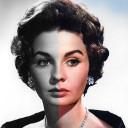
DDColor is free software for colorizing historical black-and-white photos and recoloring anime-game landscapes. Its method uses multi-scale visual features to optimize learnable color tokens for automatic image colorization. The repository provides paper, ModelScope, artistic, and tiny pretrained variants; its maker recommends ModelScope for images outside ImageNet and describes tiny as the lightest version. Local inference scripts and a runnable Gradio demo are documented, as are inference options using Hugging Face Hub and ModelScope. The repository also links to Replicate demos and an API. Users can train with ImageNet or a custom dataset, and the documentation describes ONNX export, including an example with the tiny model. Requirements are Python 3.7 or later and PyTorch 1.7 or later. The repository includes an Apache License, Version 2.0. The maker cautions that colorfulness loss can create unpleasant color blocks, including red artifacts. No dedicated support service is stated.
For and against
For
- Includes four pretrained model variants.
- Documents local inference and a Gradio demo.
- Supports training with ImageNet or a custom dataset.
- Documents ONNX export and links to an API.
Against
- Requires Python 3.7 or later and PyTorch 1.7 or later.
- Colorfulness loss can produce unpleasant color blocks.
- No dedicated support service is stated.
The verdict
DDColor provides several ways to run, train, and export an image-colorization model. Consider the stated requirements and color-block limitation when assessing whether it fits your workflow.
Who it suits
DDColor suits users seeking a free model for photo or anime-game image colorization, including those who want local inference or custom-dataset training. Users should be comfortable with its listed Python and PyTorch requirements.
Plans and prices
DDColor open-source software
No paid plans or product usage limits stated
Read 4 Oct 2026 · github.com
On the record
- Export
- The repository documents ONNX export, with an example using the tiny pretrained model.github.com · read 4 Oct 2026
- Integrations
- Inference instructions cover Hugging Face Hub and ModelScope, and the repository links to Replicate demos and an API.github.com · read 4 Oct 2026
- License
- The repository includes an Apache License, Version 2.0.github.com · read 4 Oct 2026
- Local use
- The README documents local inference scripts and a runnable Gradio demo.github.com · read 4 Oct 2026
- Maker attribution
- The paper authors are listed as affiliated with DAMO Academy, Alibaba Group.github.com · read 4 Oct 2026
- Method
- The model uses multi-scale visual features to optimize learnable color tokens for automatic image colorization.github.com · read 4 Oct 2026
- Model guidance
- The maker recommends the ModelScope model by default for images outside ImageNet and describes the tiny model as the most lightweight version.github.com · read 4 Oct 2026
- Model options
- The repository provides paper, ModelScope, artistic, and tiny pretrained model variants.github.com · read 4 Oct 2026
- Notable limitation
- The maker cautions that colorfulness loss can produce unpleasant color blocks, including red artifacts.github.com · read 4 Oct 2026
- Purpose
- DDColor colorizes historical black-and-white photos and can recolor anime-game landscapes.github.com · read 4 Oct 2026
- Requirements
- The listed requirements are Python 3.7 or later and PyTorch 1.7 or later.github.com · read 4 Oct 2026
- Security
- The repository page does not state security controls or compliance certifications.github.com · read 4 Oct 2026
- Support
- The repository directs users to online demos and documentation but does not state a dedicated support service.github.com · read 4 Oct 2026
- Training
- Users can train the model using ImageNet or a custom dataset, with training dependencies and pretrained ConvNeXt and InceptionV3 weights.github.com · read 4 Oct 2026